
Venezuela's Hidden Prize: The Rare-Earth Rush in the Guayana Shield
Venezuela's Hidden Prize: The Rare-Earth Rush in the Guayana Shield
November 19, 2025
The U.S. carrier strike group remains anchored in the eastern Caribbean, and the restricted airspace over Venezuelan waters shows no sign of lifting. As speculation mounts about a potential intervention, attention has sharpened on one overlooked element in the equation: Venezuela's untapped reserves of rare-earth elements, concentrated in the ancient geology of the Guayana Shield. These minerals, essential to everything from electric vehicle batteries to missile guidance systems, could redefine the strategic calculus for any power eyeing Caracas.
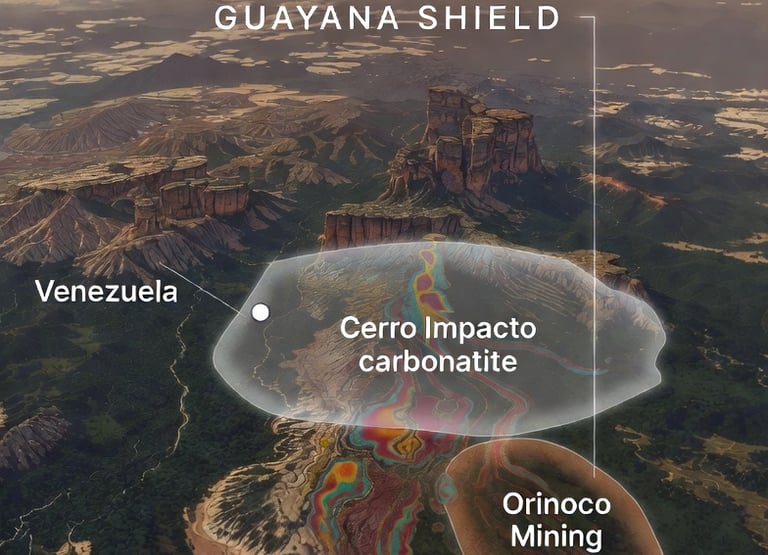
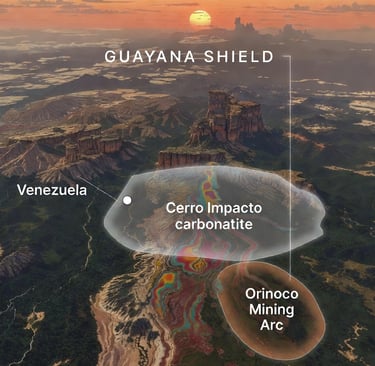
The Guayana Shield, a 1.7-billion-year-old craton spanning much of northern South America, forms the geological backbone of southern Venezuela's Bolívar and Amazonas states. It is one of the planet's oldest continental fragments, harboring rich deposits of critical minerals amid dense Amazonian jungle and river systems. Recent lab analyses of samples from the Colombian-Venezuelan border, conducted amid a surge in informal mining, confirm high concentrations of rare earths alongside coltan (a key ore for tantalum) and cassiterite (tin ore). These findings, detailed in a November 2025 Guardian investigation, trace the minerals' path to exporters in Caribbean ports, underscoring the region's growing role in global supply chains.
Venezuelan government estimates, first floated in 2016 with the creation of the Orinoco Mining Arc, peg the country's rare-earth reserves at a minimum of 300,000 metric tons. These include light rare earths like cerium and lanthanum, used in catalytic converters and optical lenses, as well as heavier ones such as neodymium and thorium, vital for magnets in wind turbines and high-tech electronics. The Orinoco Mining Arc, a 111,844-square-kilometer zone south of the Orinoco River, encompasses much of this potential. It overlaps with biodiverse hotspots like the Imataca Forest Reserve and the Caroní River watershed, which supplies 60 percent of Venezuela's hydroelectric power. Yet extraction here remains embryonic: no large-scale commercial operations exist, and production figures are negligible compared to global leaders like China, which controls 44 million metric tons in reserves and produced 270,000 metric tons in 2024 alone.
Newer surveys add layers to the picture. A 2023 geochemical study of the Navay phosphate deposit in southwestern Venezuela's Barinas-Apure Basin revealed rare-earth concentrations of 60-80 parts per million in upper saprolite horizons, with patterns indicating suboxic depositional environments from the Late Cretaceous. In the Guayana heartland, the USGS has documented sites like Cerro Impacto in Bolívar state, a carbonatite deposit with residual rare-earth enrichment, dating back to assessments in the 1980s and 1990s, but updated through ongoing U.S.-Venezuelan technical cooperation until the early 2000s. Preliminary 2025 mapping in the Orinoco Mining Arc, as reported by Venezuelan mining outlets, identifies high-potential zones for light and heavy rare earths in southern formations, though detailed quantification lags due to limited fieldwork.


Written By: AD WORLD
AD News Editorial Team collaborates on stories in-house and with external reporters to bring you exclusive pieces, like this one.
DON'T MISS OUT, SUBSCRIBE & KEEP UP WITH ALL THINGS AD PLATFORM WHEREVER YOU GET YOUR CONTENT!
What keeps these reserves locked away?
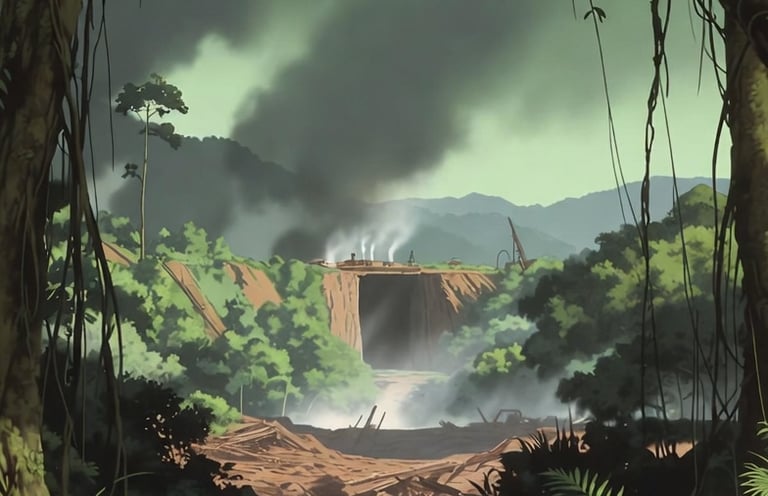
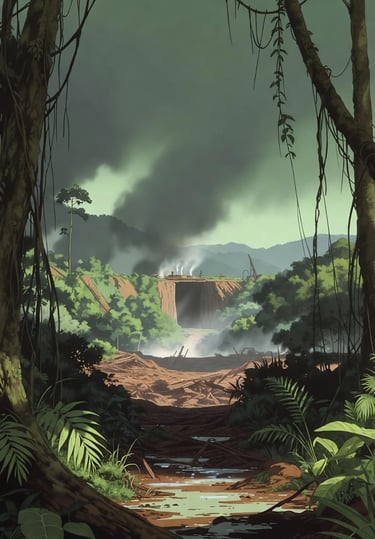
Instability and informality. Armed groups, including Colombian guerrillas like the ELN, have seized control of mining districts since 2023, blending rare-earth extraction with drug trafficking and extortion. A Monitoring of the Andean Amazon Project analysis from August 2025 documented 22 hectares of deforestation in Yapacana National Park between March 2024 and August 2025, almost entirely from illegal digs targeting coltan and rare earths. Satellite imagery shows mercury contamination in Orinoco basin rivers, threatening fisheries exported to Brazil and Guyana. The United Nations Office on Drugs and Crime labeled Venezuela a "minerals crime hotspot" in a 2025 report, citing state complicity and opaque exports.
Beijing's April 2025 export curbs on rare earths, retaliation for U.S. tariffs, have only accelerated the scramble. Western buyers, wary of China's 90 percent market dominance, are scouting alternatives, but Venezuela's chaos deters formal investment. As one analyst noted in a November 2025 Southern Pulse dispatch, the borderlands now form a "new extraction frontier," where global demand meets criminal enterprise.
In the context of Washington's southern pivot, these deposits represent more than geology, they are a lever for supply-chain diversification. Tapping them could yield billions, but only under stable governance. For now, the jungle guards its secrets, as the carrier's silhouette lingers on the horizon.
The situation continues to develop.
Avedis Daily LLC © 2026
This material may not be published, broadcast, rewritten, or redistributed. ©2026 Avedis Daily, LLC. All rights reserved. Quotes displayed in real-time or delayed by at least 15 minutes.