
Jesus Our Comfort - A Correction of Teaching & Proper Fear of God
Jesus Our Comfort - A Correction of Teaching & Proper Fear of God
Beloved,
Tonight, I wept. I have never wept in this way before. Yet the nearer I draw to God’s will, the deeper into the heart of the Father I find myself.
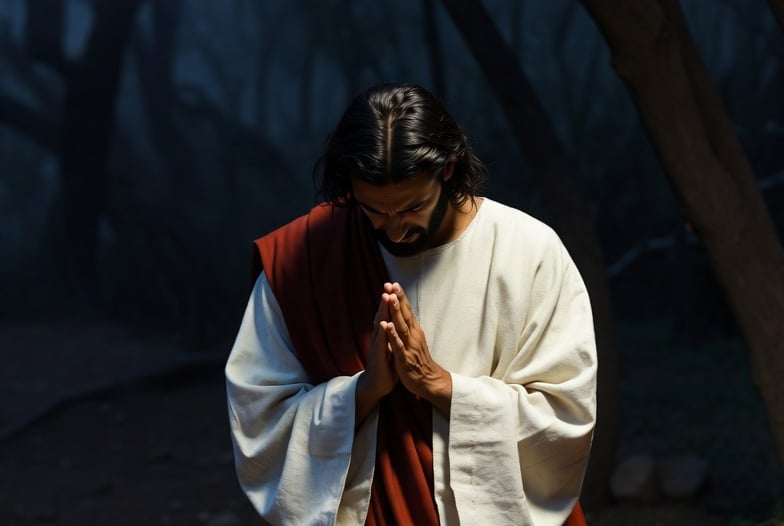
I say this to examine and clarify why Jesus wept, why He sweat blood, and why the angel of the Lord came to strengthen Him.
There has been a lie, one I now believe to be the only lie that has crept into the story of the Passion through oral tradition and human sentiment. A fallen, human emotion has been intentionally attached to the scene in the Garden. It is at the tree, before our Savior, that the accuser has once again played upon our pride and separated countless Christians from their Savior.
Yet this very moment reveals why God’s Word is perfect and without error. The heart of the Father is not the heart of fallen man. The love of Jesus is not fallen love; it is wholly perfect, the exact reflection of the Father. The Holy Spirit is our connection to the Father’s heart, and Jesus is our connection to His will.
Tonight, I was given a word directly from Jesus and the Holy Spirit. Both spoke clearly, revealing the truth of what happened in the Garden. Both have charged me to feed His flock and correct this deception.
So I will begin where the moment in the Garden truly began: in Egypt, with Joseph and his brothers. That scene is the accurate depiction of the true fear of God, written for us as a guide.
Many consider Judah shifted his future to become THE tribe in this moment as he accepted sacrifice first. The one who did the “right” thing when Joseph accused them of theft and threatened to keep Benjamin. Yet this moment is one of the most powerful images in the entire Old Testament. It is the moment God chose which of Abraham’s descendants would carry the line that would bring the Messiah to the world and deliver it out of slavery to the false gods of this world, and death.
God chose the tribe of Judah because one man exhibited the proper fear of the Father, not fear of wrath or personal peril, but fear of causing pain to his father’s heart.
Joseph was not merely a foreshadowing of lineage and history; he was God’s living example of sin’s true nature. Joseph was his father’s most beloved and cherished son. He reflected his father’s love and favor to the world, not only in his character and gifts, but in his exalted status. He was truly a gift from God. Yet his brothers hated him. Though he was the most obedient and best of the sons, they blamed him for their own diminished standing rather than repenting of their actions and the generational disobedience that had already separated them from their father’s full love.
Had they and their forefathers walked in honor before the father, they would have stood equal with Joseph. But they did not, and so they resented the father and hated the son.
When they sold Joseph into slavery and separation from their father, they inflicted the deepest possible wound on the one they hated, without taking responsibility for their own guilt. They took revenge and then had to live with it.
By selling Joseph, they struck at the most vulnerable place in their father’s heart. So too do we most deeply wound the Father when we continually nail His most beloved Son to the cross.
We grow angry at a Father we have all disobeyed, yet we take the revenge we do not deserve by attacking ourselves and causing others to fall as well. Every time we sin, we sell Joseph. Every time we lead another who is equally loved into sin, we double the pain in the heart of God.
The currency of sin’s debt is separation from God’s perfect love. To commit mortal sin is to attack His heart directly. The losses are measured only in love. God’s perfect love is a debt no fallen creature can ever repay in full, yet He demands repayment still. Therefore, He sacrifices His only Son, who willingly lays down His life to spare the Father that unbearable pain.
When God orchestrated the events of Joseph’s life, He chose one brother to embody the only fear worthy of the lineage that would lead to Jesus: Judah’s fear.
All the brothers had betrayed their father and brother, but only Judah exhibited fear of his father greater than fear of lifelong slavery or death. When convicted by God’s justice, Judah accepted full responsibility. He became the archetype of the greatest earthly debt: attacking God’s perfect love, His perfect will, and His perfect heart.
Judah said to Joseph (unaware he was speaking to his brother):
“Now therefore, please let your servant remain instead of the boy as a servant to my lord, and let the boy go up with his brothers. For how can I go up to my father if the boy is not with me? I fear to see the evil that would come upon my father.” (Genesis 44:33–34)
He did not fear greater punishment for himself; he feared the grief that would crush his father if even one more son were lost. Having already tasted the horror of causing his father pain, Judah considered death far more bearable than ever causing that pain again. Fear of wounding his father completely replaced fear of his own suffering. He surrendered his entire identity rather than risk causing love to be replaced with anguish.
One brother was willing to lay down his life for his brother rather than cause his father suffering over a beloved son.
We deserved death.
So how did this truth break through to me tonight?
In a way I can only describe as pure divine appointment, God, the lover of dreamers, chose a dreamer to reveal this understanding.
I too am a dreamer. All my life I have shared only the pleasant dreams, hiding the rest because they were so dark that, until tonight, I believed the gift was actually a curse, an atonement for some deep evil in me.
Earlier this year, led by prayer, I fasted from the one thing I used to numb myself more than anything else: alcohol. It was the first time in over thirteen years I had been sober for more than forty consecutive days.
The root was not pleasure in drinking, nor even the sleep excuse I gave everyone. The real root was fear.
My nights had become torment, conscious prisons and subconscious hells. I cannot put into words the demonic horror I experienced night after night; language fails, and I believe God designed it that way. Human mouths were made to proclaim His goodness and call the lost home, not to describe the utter absence of the Father’s love.
I kept silent because I feared that if others knew the darkness I saw, they would run from me in terror, associating me with the evil I merely witnessed. Many nights, especially as my faith grew, the dreams turned to repeated, torturous deaths, my own. I was convinced this was my personal cross to bear alone.
So I sought unconsciousness through alcohol. Shutting my brain down completely was the only peace I knew. Even the physical damage of sleep apnea felt better than the alternative.
People thought I drank out of addiction. I let them believe it. The truth, that I was choosing temporary death over the nightly torment, was far darker and would have alarmed them more.
But Lent changed everything. On Holy Thursday night into Good Friday morning, I stayed awake with Jesus instead of escaping. The nights became battlegrounds where Jesus Himself was my rallying cry. Fear lost its grip. He gave my soul a reason to enter suffering willingly.
Self-denial taught me its power. The torments still come most nights, I am still “killed” several times a week, but now I step into the ring ready to fight and die for my Jesus rather than for myself.
Writer's Note: Follow-up from the week following this experience:
Jesus was not alone by happenstance. Remember that every single moment is intentional. This is God the Son, through whom all things are made, including reality, time, space, and everything else. To think that His request for the others to pray with Him, and their failure to do so, was simply a moment of laziness or bad friendship is not wrong, but it is a very short-sighted observation. In truth, He knew they were going to respond this way. So why did He make the request and ensure it was recorded in Scripture?
It was for emphasis. For those who know the deep pain of loneliness, it is a quicksand-like emotional trap: the harder you try to escape, the deeper you sink. He is giving an example. He is about to die for His friends, and they won’t even get out of bed to comfort Him.
Jesus began His redemptive Passion in that very moment. More specifically, He chose to begin it isolated, as a signal to the lonely who mourn, fulfilling His promise that they shall be comforted. He goes to meet you exactly where you will feel most isolated in life, in the cup that God gives you for your chosen purpose. You can ask for a different purpose, but if it is the Father’s will, reality will conform accordingly.
So in your moments of “Why me?”, in your extreme isolation, sadness, abandonment, or forlornness, Jesus was not alone simply because the apostles were bad friends. He was alone to be with you in your most difficult and horrible isolation: in that moment of extreme horror or pain, in the internal prison so many of us build in our lives, when it feels that everyone has abandoned you. He made sure His Passion began right there, next to you.
He did it intentionally to show this: He knows. He chooses to join you in isolation so that He experiences it with you. It is the same Jesus who wept with His cousins before raising Lazarus. He chose to love them and share in their grief, not as an observational God, but as a God who refuses to allow a single one of His children to suffer alone without going through every moment Himself.
He is here for you, no matter what you have done. He knows the pain that drove you to those actions, the pain that molded you into someone you may think is irredeemable. Even in your moment of complete isolation, darkest and most terrifying, like a void, He is there in that very position before the Father for you, because He knows.
He begins His Passion this way, for you and for me, so that we may know He has not left us to the world and to a God who will merely judge us. He will shoulder that fear. He will take your blood, sweat, and tears and make them His own, sharing them from the moment of your creation right up to the moment you stand before the Father.
And do not think that He stands with you in defiance of an unjust God. The only One who had the power to free you is Jesus, and God the Father sent Him, knowing everything. You do not stand before a detached Judge or a distant Father; you stand before Abba, who sent His most beloved Son to retrieve you and bring you home to Him. It is in this way that God so loves… YOU.
Jesus did not weep from fear of physical suffering or death. That lie ends here, with you in your heart as you read this.
He sweat blood and wept because, in that moment, He shouldered the true fear of God that every human being has earned, the Judah-level fear for every soul that has ever lived or ever will live.
His agony was not personal weakness. It was the collective horror of knowing He was shouldering the total weight and scope of all sin. That which was separating billions from the Father and breaking the Father’s heart eternally, He shouldered for us and paid the debt we cannot, out of Love for the Father. Physical torture is the lowest level of this pain. The highest is the eternal kind, forever unpaid unless One absorbs it completely.
That is why the angel came: not to comfort a trembling man afraid of pain, but to strengthen the Sinless One who was voluntarily carrying the righteous terror we owe. He asked the disciples to pray with Him not for His own sake, but because He was inviting them, the ones He had chosen, to taste this same sacrifice, this same fear of grieving the Father.
That is why the resurrected Jesus asked Peter three times, “Do you love Me?”, to replace Peter’s three denials born of fear of death with the higher fear: fear of wounding Love. “Not My will, but Yours be done.” He wept our tears. He carried our terror, the terror we could never have survived standing before the Father. His tears were not His own. His fear was not His own. It was mine. It was yours. It was ours.
Tonight I sat weeping, asking:
How many have I failed?
How many have I led astray?
How many times have I abandoned my calling and wounded the Father by my separation?
I thought I was comforting Jesus in His fear.
In truth, He allowed me to feel His fear, the fear of causing the Father pain.
Suffering shared with Him is the greatest gift, reserved only for those who have first shown they understand the depth of this debt.
Repent.
Never again settle for a Savior who is merely “brave enough” to face the cross out of obedience.
Behold the Lamb who willingly became the fear we owe, who sweat blood because the thought of even one soul eternally separated from the Father was more unbearable to Him than all the wrath of hell.
He has already carried your terror.
Return to Him.
Fear only this: ever causing the Father pain again.
Amen.
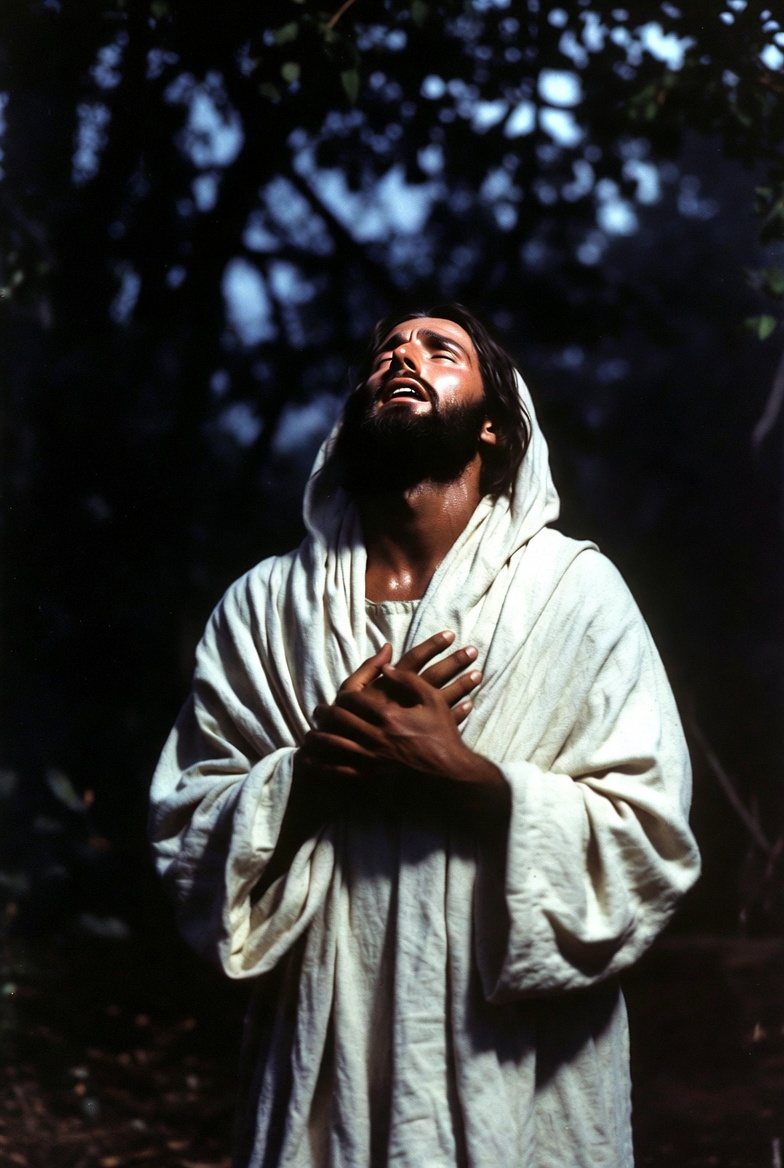
And tonight the Holy Spirit moved.
Jesus sat with me.
An angel strengthened me while I wept.
I was shown the Father’s heart breaking over every soul I have caused to stumble, every gift I have buried out of laziness, anger, or lust, every eternal death my silence has contributed to.
I was shown that Judah acted first and alone, willing to bear not only his own guilt but the guilt of all his brothers so they could return to the father. Adam had dropped his responsibility for Eve and blamed God. Judah did the opposite: he declared himself the least worthy of all the brothers, elevating the others by taking the lowest place.
In that moment God declared Judah first among the tribes, because he had freely made himself last.
Only Judah feared the Father’s pain more than his own destruction.
That is the true fear of God: not terror of wrath, but terror of causing pain to Perfect Love.
That is why, in heaven, no one will ever sin, not because they fear punishment, but because the thought of grieving Infinite Love is more unbearable than non-existence itself.


Written By: Gabriel Merigian & AD FAITH
AD news Editorial Team collaborates on stories in-house and with external reporters to bring you exclusive pieces, like this one.
Avedis Daily LLC © 2026
This material may not be published, broadcast, rewritten, or redistributed. ©2026 Avedis Daily, LLC. All rights reserved. Quotes displayed in real-time or delayed by at least 15 minutes.